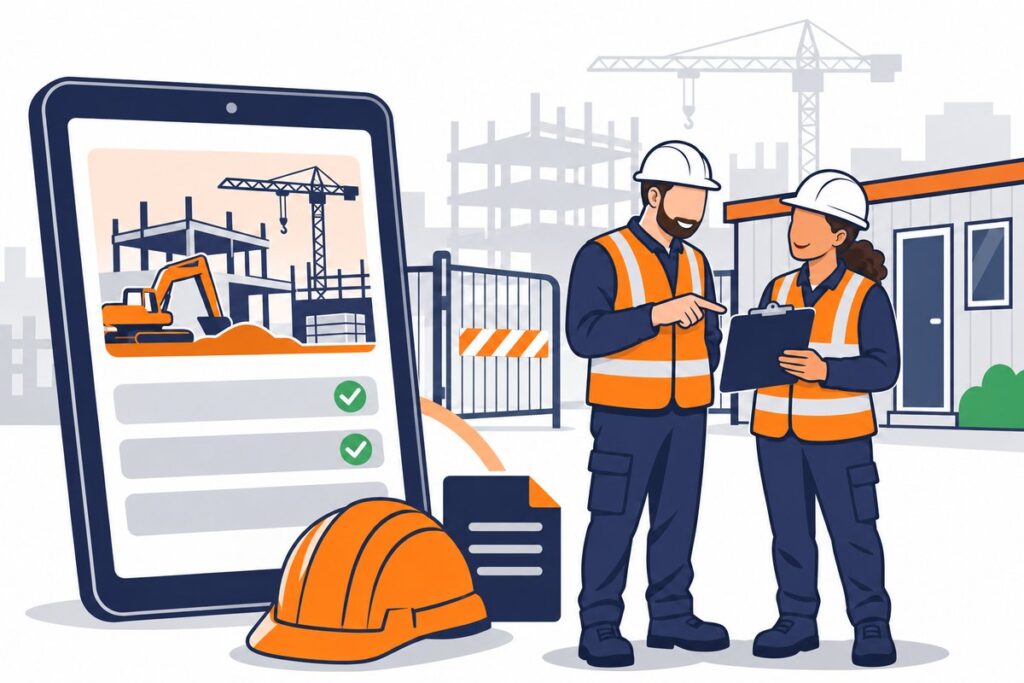
Dangers in Construction and How to Reduce Site Risks
Construction sites change every day. A clear walkway can become a delivery route, an open floor can gain a new edge, and a routine refurbishment can uncover materials nobody expected. Workers need to recognise those changes and understand what to do before they put themselves or someone else at risk.
The main dangers in construction include falls from height, moving vehicles, falling objects, electrical hazards, excavation collapse and harmful exposure to dust or asbestos. Manual handling, noise, vibration and fire also need attention. Effective prevention combines planning, suitable equipment, physical controls, competent supervision and clear instructions.
At Induct For Work, we help businesses organise the induction and record-keeping part of that process. Our online induction platform allows teams to share site information before arrival and track completion. However, a training record cannot make an unsafe work area safe. The precautions described in the induction must also exist on the ground.
Who this is for
This guide is for principal contractors, subcontractors, site managers and health and safety teams. It also helps businesses commissioning refurbishment, maintenance or fit-out work understand the questions they should raise before work starts.
We focus on practical construction site safety and explain the relevant Great Britain and Northern Ireland distinctions where legislation matters.
What the construction accident figures tell us
HSE’s provisional figures record 25 construction worker fatalities in Great Britain in 2025/26. Construction had the highest number among the industry groups in that release. These figures cover fatal accidents, rather than the full burden of work-related illness. See HSE’s fatal injury statistics for the reporting period, scope and provisional status.
Nevertheless, accident totals tell only part of the story. Lung disease, hearing damage and other occupational conditions can develop after repeated exposures. Consequently, a site with no recent accident may still have serious health risks that need action.
Use national statistics to understand the wider problem, then assess your own activities. A roof replacement, basement excavation and occupied-office refurbishment present different combinations of danger.
Ten construction hazards that deserve close attention
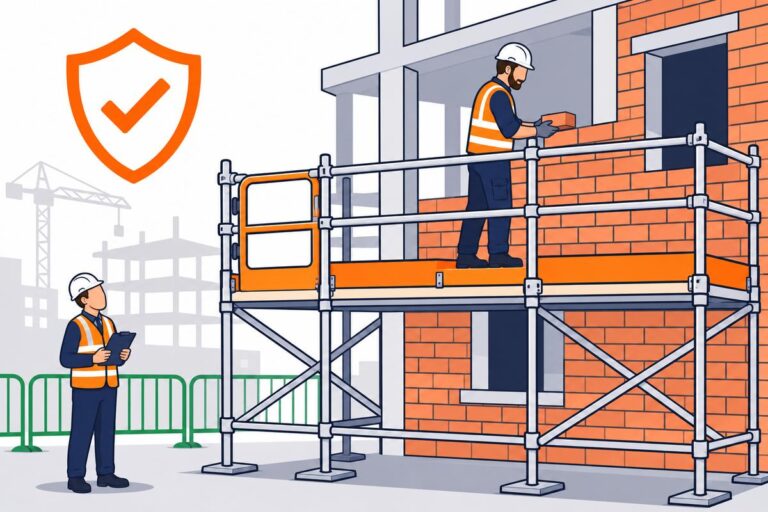
1 Falls from height
Unprotected edges, fragile roofs, floor openings and unsuitable access equipment can expose workers to a fall. Even familiar tasks need proper planning, particularly when the working surface or access route changes.
First, consider whether the job can take place from ground level. Where work at height remains necessary, choose suitable measures to prevent falls before considering equipment that limits their consequences. HSE’s work at height hierarchy gives collective protection priority over personal protection.
The induction should identify restricted areas and explain who can authorise access. Meanwhile, competent people must arrange suitable equipment, inspections and any necessary rescue provisions. Simply telling workers to wear a harness does not complete that assessment.
2 Moving vehicles and mobile plant
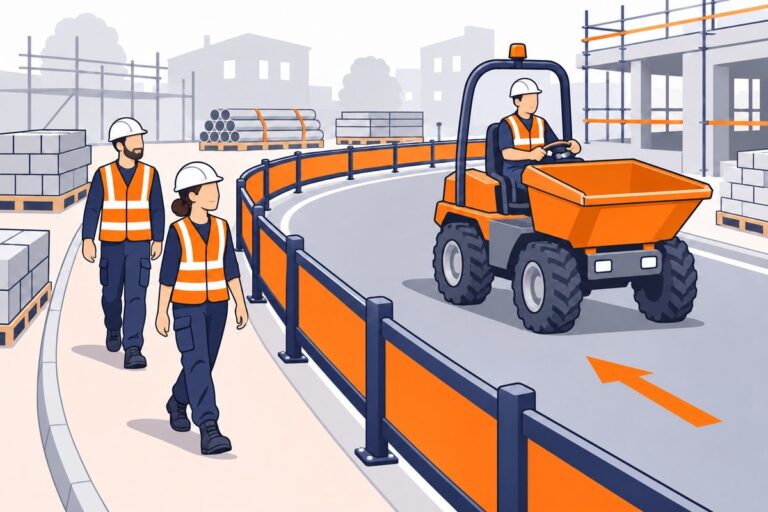
Delivery lorries, excavators, dumpers and telehandlers create collision and crushing risks. Blind spots become particularly dangerous when pedestrians share a route with reversing vehicles.
Plan separate pedestrian routes and vehicle movements wherever possible. Also consider delivery times, crossing points, visibility and how to minimise reversing. HSE’s construction traffic management guidance explains these priorities.
For example, tell a visiting driver where to wait and who will meet them before arrival. Once on site, workers should follow the designated walkways and never assume an operator has seen them. If a delivery blocks the pedestrian route, the site team needs to resolve that obstruction.
3 Falling materials and lifting operations
Tools, loose materials and suspended loads can injure people below or beside the work. Poor storage and uncontrolled access can also expose other trades and members of the public.
Arrange suitable storage, secure materials and establish exclusion areas for relevant operations. In addition, lifting equipment needs appropriate examinations and inspections. HSE states that lifting operations must be properly planned by a competent person, appropriately supervised and carried out safely.
The site induction should explain how workers recognise an exclusion zone and who controls access. However, it does not qualify someone to plan a crane lift or act as a slinger-signaller.
4 Electricity and hidden services
Electrical hazards can arise from damaged tools, temporary supplies, overhead lines and concealed cables. During refurbishment, a circuit that someone assumes is disconnected may remain live.
Before intrusive work, establish how the task could affect existing services and arrange the necessary competent checks and isolation. Remove damaged equipment from use and prevent makeshift repairs. HSE’s electrical safety guidance for buildings stresses planning and competent specialist work.
Our guide to workplace electrical hazards provides further awareness topics for your induction. Explain reporting arrangements clearly, including what workers should do when they discover an exposed cable or damaged plug.
5 Excavations and unstable ground
A trench can collapse without giving workers time to escape. Nearby plant, stored spoil, water and adjacent structures may affect stability, while buried services create additional dangers.
Plan the excavation and its support before digging. Then provide suitable access, edge protection and controls for nearby activity. HSE’s excavation guidance requires competent inspection at the start of each shift and after relevant events affecting stability.
Workers should know which areas they may enter and how to report changes. For instance, water entering a trench after heavy rain should prompt reassessment. A previous inspection does not establish that conditions remain safe throughout the project.
6 Construction dust and silica
Cutting, drilling and grinding concrete, stone or masonry can release harmful dust. Because exposure may cause disease years later, the absence of immediate discomfort can give workers false reassurance.
Reduce dust creation through material selection and work methods, then use suitable controls such as water suppression or extraction. Respiratory protective equipment may also be necessary. Tight-fitting masks require face-fit testing, appropriate selection and correct use, as described in HSE’s construction dust guidance.
Brief nearby trades as well as the person operating the tool. Otherwise, one worker’s dusty task can expose several people who have no reason to expect it.
7 Asbestos during refurbishment and demolition
Asbestos-containing materials may remain in buildings constructed before 2000. Drilling, cutting or disturbing them can release fibres, including during apparently minor maintenance jobs.
Establish the relevant asbestos information before work begins and arrange appropriate investigation for the planned activity. HSE explains the risks in its construction asbestos guidance.
If workers encounter suspected material unexpectedly, they should stop the affected activity, avoid further disturbance and notify the responsible person. Explain that procedure during induction. General awareness training does not establish competence to carry out asbestos work or remove the need for specialist arrangements.
8 Manual handling and awkward working positions
Plasterboard, blocks, glazing and equipment can be difficult to move safely. The risk depends on the load, route, posture, repetition and worker, rather than weight alone.
Where possible, avoid hazardous handling or use suitable mechanical assistance. For example, delivery closer to the point of use can reduce repeated carrying. HSE’s manual handling guidance for construction puts prevention and task design ahead of lifting technique alone.
Explain available handling aids and how workers can request help. Also check that programme pressure does not encourage people to abandon the planned method to finish a delivery quickly.
9 Noise and vibration
Repeated use of noisy or vibrating equipment can damage hearing and cause hand-arm vibration syndrome. These risks need active management even when the equipment appears to operate normally.
Assess exposure and select equipment and working methods that reduce it. Maintenance, suitable work organisation and any required health surveillance also matter. HSE’s physical health risk guidance explains the potential consequences.
The induction should introduce reporting routes for symptoms and equipment concerns. However, the task briefing must explain the specific controls, including any exposure restrictions and hearing protection requirements that apply.
10 Fire and obstructed escape routes
Hot work, flammable products, temporary electrical equipment and combustible waste can contribute to construction fires. Meanwhile, changing partitions or stored materials may obstruct the route people expect to use.
Review ignition sources, fuel storage, warning arrangements and escape routes as the work develops. HSE’s construction fire safety guidance highlights the need to keep precautions aligned with changing conditions.
Explain the alarm, assembly point and emergency contacts during induction, then show people the relevant routes on arrival. For occupied premises, coordinate with the building’s management so construction activity does not compromise existing fire precautions.
Small housekeeping failures can create serious risks
Trailing leads, packaging, mud and poor lighting can turn an ordinary walkway into a fall hazard. These problems also affect emergency access and the movement of materials.
Allocate responsibility for clearing waste, maintaining routes and correcting defects. Furthermore, give workers a straightforward way to report an obstruction they cannot safely remove. HSE’s slips and trips guidance treats safe access and orderly working areas as part of site management.
Think beyond the workforce too. Neighbours, delivery drivers, visitors and pedestrians may encounter hazards at the boundary. Suitable fencing, controlled access and protection from falling materials form part of protecting the public.
Clear responsibilities matter before anyone starts
In England, Scotland and Wales, the Construction (Design and Management) Regulations 2015 set out construction dutyholder responsibilities. HSE’s principal contractor guidance includes planning, managing and coordinating the construction phase, providing suitable site inductions and preventing unauthorised access.
Contractors also have responsibilities for the work and workers under their control. They must provide a suitable site-specific induction unless the principal contractor has already provided it, alongside appropriate supervision, information and instructions. HSE explains these contractor duties separately.
Northern Ireland has its own CDM Regulations 2016. Therefore, check the framework applying to the project rather than treating every UK legal reference as interchangeable.
Our UK contractor induction guide explains how to organise the supporting onboarding process. Assigning a course helps communicate requirements; it does not transfer a contractor’s legal duties to the software provider.
Make the site induction useful to the person doing the work
HSE says every site worker must receive a suitable site induction. The information should reflect that site and its particular risks. Its site rules and induction guidance also explains that visitor briefings should match the nature of the visit.
Use the following checklist to connect the briefing with decisions people actually make.
| Topic | What the worker needs to know |
|---|---|
| Arrival and access | Where to report, sign in and walk safely. |
| Current work areas | Which zones are restricted and who controls access. |
| Emergencies | How to raise the alarm, evacuate and obtain first aid. |
| Task boundaries | Which work needs further briefing, permission or specialist competence. |
| Health precautions | How to follow dust, noise, handling and other relevant controls. |
| Reporting | Who receives urgent concerns, incidents and near-miss reports. |
| Welfare and support | Where facilities are and how to raise questions. |
For larger projects, our commercial construction induction guide explores how to organise information across contractors and work areas. Keep the core message consistent, then tailor the detail to each person’s role.
Combine preparation with checks on arrival
Prepare information before mobilisation
Send the relevant induction early enough for workers to complete it and raise questions. Include current maps and photographs where these make instructions clearer. Our guide to conducting induction training offers a useful structure.
At the same time, collect the documents your project requires. Induct For Work’s contractor pre-qualification tools support document collection, review and expiry trahttps://www.inductforwork.co.uk/induction-contractor-pre-qualification/cking. However, someone with appropriate knowledge still needs to assess whether the evidence suits the proposed work.
Check understanding at the site
When a worker arrives, confirm that the completed induction matches the project and current conditions. Then show the relevant access route, welfare facilities and emergency arrangements.
Ask practical questions, such as where they would report a damaged barrier. This can reveal confusion that a completion certificate alone will not show. Our article on combining online and face-to-face inductions explains how these methods can work together.
Make instructions accessible to the people receiving them. Clear photographs, short explanations and suitable language support can help workers understand unfamiliar arrangements. However, translated content still needs review where an error could change a safety instruction. Give people time to ask questions without treating uncertainty as a failure. If someone cannot explain a critical instruction, resolve that gap before they begin the affected work. Then record any additional briefing so the next supervisor understands what happened.
Brief people when conditions change
A returning worker may need an update if the access route, work sequence or emergency arrangements have changed. Similarly, a new task may require additional instruction and supervision.
Use focused toolbox talks to discuss the relevant change and invite questions. Keep a record of the topic and attendance, then check whether people follow the revised arrangements.
When a delivery changes the working day
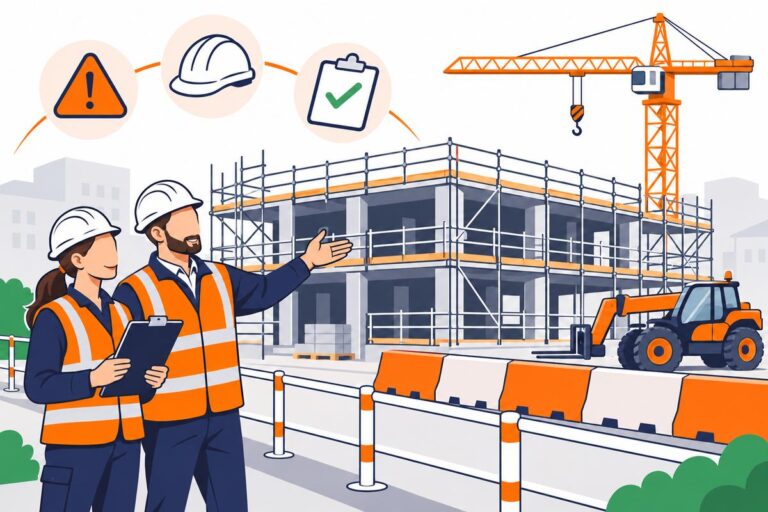
Consider a refurbishment project where workers enter through a courtyard. Their induction shows a protected walkway leading to the site office. Later, a delivery vehicle arrives with materials that need unloading across that route.
The driver may have completed the visitor briefing, while every worker holds a current induction record. Nevertheless, those records do not resolve the new conflict between pedestrians and unloading activity.
The site team should coordinate the delivery, establish suitable controls and explain any temporary access changes before people encounter the obstruction. Once unloading finishes, the team should check that the normal route is safe to reopen.
Afterwards, review why the conflict occurred. Perhaps the booking instructions omitted the unloading location, or the storage plan left too little room. Updating the delivery arrangements could prevent the same problem on the next shift.
This example shows how induction fits into daily management. It gives people an agreed starting point, while supervision and coordination keep the arrangements relevant as work progresses. A photograph in yesterday’s course cannot confirm that today’s walkway remains clear. Someone must check the actual conditions and respond when they change.
Turn reports and records into practical improvements
A useful reporting process helps supervisors identify problems before they repeat. For example, several reports about pedestrians entering a loading area may point to a badly placed walkway, unclear barriers or delivery arrangements that need redesign.
Our incident reporting feature supports capturing incidents and concerns. An internal report does not replace any separate statutory notification that applies. Urgent dangers also need immediate action through the site’s emergency or escalation arrangements.
Meanwhile, organised induction records help administrators find completion dates, assessment results and acknowledgements. Review these alongside observations from the workplace. If people repeatedly misunderstand an instruction, revise the content and check whether the underlying procedure is workable.
Give your construction team a clearer start
Construction safety depends on what happens before, during and after the induction. The site team needs sound controls, workers need relevant instructions and managers need a reliable way to follow up.
Induct For Work helps bring the induction administration together. Create site-specific content, invite workers before arrival, collect required documents and retain completion records your team can retrieve.
Request a demonstration to discuss your construction induction requirements and see how the platform could fit your existing site processes.
Frequently asked questions
Common dangers include falls from height, moving plant, falling objects, electricity, unstable excavations, dust, asbestos, manual handling, noise, vibration and fire. The risks vary by project and activity, so use a site-specific assessment rather than relying on a generic list.
HSE states that every site worker must receive a suitable site induction. Under CDM 2015 in Great Britain, principal contractors and contractors have relevant duties. Northern Ireland operates under its own CDM 2016 framework. Induction content should suit the site and the work.
Online delivery can cover site information, rules, acknowledgements and knowledge checks before arrival. However, the employer or contractor must still ensure the induction is suitable and provide necessary briefings, practical training and supervision. Check understanding and current conditions when the person arrives.
No. Risk assessments and method statements address the proposed work and its controls. A site induction introduces the wider site arrangements. Workers may need both, alongside any task-specific permissions, practical instruction and competency checks required for their activities.
Review information when hazards, access routes, emergency arrangements or working methods change. Also consider gaps identified through incidents, questions or observations. The appropriate update depends on the change and the people affected; an annual refresher alone may be insufficient.
No. Completion shows that the person completed the recorded induction process. Competence for a particular task also depends on relevant skills, knowledge, training and experience. Check those requirements separately and provide supervision appropriate to the worker and activity.
Send us any questions or great tips to share? – Contact us here.
Induct for Work – the only system you need to create and manage induction training in the UK.
Author: James Ruby
Published: 02/05/2019
Updated: 14/11/2026