
Psychosocial Hazard Reporting for UK Workplaces
Psychosocial hazards are not always as visible as a broken handrail, a wet floor or a damaged machine guard. However, they can still create real harm when they are ignored, normalised or treated as “just part of the job”.
In UK workplaces, psychosocial hazards often appear through excessive workload, poor support, bullying, harassment, aggression, unclear roles, low control, conflict, isolation, badly managed change or ongoing pressure that is not being addressed. HSE’s work-related stress guidance uses six key areas of work design: demands, control, support, relationships, role and change. Employers also have a legal duty to protect workers from stress at work by carrying out a risk assessment and acting on it.
That is where psychosocial hazard reporting becomes important.
A good reporting process helps workers raise concerns early, gives managers better visibility and creates a record of what was reported, who reviewed it and what action followed. Instead of waiting for issues to become sickness absence, grievances, resignations or formal disputes, organisations can identify work-related causes and respond earlier.
For many businesses, the problem is not that people never notice psychosocial risks. The problem is that the reporting process is unclear. Workers may not know whether to speak to a manager, HR, health and safety, payroll, a site supervisor or someone else. Some may worry that a report will be treated as a complaint against a person rather than a workplace risk. Others may stay silent because nothing happened last time.
A clear psychosocial hazard reporting process gives people a practical route to speak up. It also helps organisations move from vague concerns to structured, useful information.
What psychosocial hazards mean in UK workplaces
A psychosocial hazard is a work-related factor that can affect a person’s psychological or physical health. It is not simply about someone “feeling stressed”. It is about the conditions, behaviours, demands or systems of work that may create harm.
Examples include high workload, poor supervision, lack of support, bullying, exposure to aggression, unclear responsibilities, conflict, remote isolation, rushed change or repeated pressure without enough resources.
A psychosocial risk is the chance that one or more of those hazards will cause harm. That risk can depend on how often the hazard occurs, how severe it is, how long it continues, how many people are affected and whether the organisation responds properly.
This distinction matters. A useful report should not only say that someone is struggling. It should help the business understand what work factor may be contributing to the problem.
For example:
- “I am stressed” may be true, but it is hard to act on by itself.
- “Our team is covering two vacant roles, missing breaks most days and receiving customer complaints because response times are impossible” gives managers something clearer to assess.
- “A supervisor repeatedly shouts at staff in front of others and people are avoiding reporting mistakes because they fear the reaction” gives the organisation a work-related behaviour to review.
- “A rota change was introduced with little notice and employees are unsure who approves shift swaps” identifies a change and role clarity issue.
A better report does not need to be long. It needs to be clear, factual and connected to the way work is organised or managed.
Why early reporting matters
Psychosocial risks can grow slowly. A team may begin with a busy month, then accept missed breaks, then lose staff, then rely on overtime, then experience mistakes, complaints, conflict and absence. By the time the problem becomes obvious, the underlying risk may have been present for months.
Early reporting gives an organisation a chance to act sooner.
A worker may report that workload has become unrealistic. A contractor may report that instructions are unclear. A receptionist may report repeated aggression from visitors. A warehouse supervisor may report that a team is fatigued because staffing levels have not matched demand. A health care worker may report exposure to distressing incidents without enough debriefing or support.
Each report can help managers see what is happening beyond spreadsheets, meetings and formal performance data.
This does not mean every report automatically becomes a formal grievance or disciplinary matter. Some reports may lead to a workload review, staffing adjustment, clearer instructions, manager coaching, rota change, incident review or customer-facing control. Others may need HR involvement, safeguarding, dignity at work handling or formal investigation.
The reporting process should help the organisation choose the right route.
Common psychosocial hazards that should be reported
Psychosocial hazards can appear in many types of work. Offices, schools, construction sites, depots, warehouses, councils, events, transport businesses, care services, charities and multi-site employers may all experience them in different ways.
Common examples include:
- excessive workload or unrealistic deadlines
- repeated missed breaks
- poor staffing levels
- unclear responsibilities
- conflicting instructions from different managers
- low control over how work is done
- lack of support from supervisors or colleagues
- bullying or repeated unreasonable behaviour
- harassment or conduct connected with protected characteristics
- aggression, threats or violence from customers, patients, clients or members of the public
- poor communication during organisational change
- fatigue caused by shift patterns or overtime
- exposure to distressing, traumatic or confronting situations
- lone working without enough contact or support
- team conflict that is not being resolved
- unsafe pressure to rush, skip checks or ignore procedures
- isolation for remote, mobile or field-based workers
Bullying and harassment need careful handling. Acas says employers should take steps to prevent bullying and discrimination and should take complaints seriously. Some behaviour may need a health and safety response, an HR route, a grievance process or more than one pathway depending on the situation.
A clear reporting process should not force every issue into the wrong category. Instead, it should help the organisation understand what has been raised and decide who needs to respond.
Who this page is for
This guide will be useful for UK organisations that want a more structured way to handle psychosocial hazards, work-related stress risks and workplace behaviour concerns.
It is especially relevant for:
- health and safety managers
- HR teams
- operations managers
- site managers
- facilities managers
- school business managers
- council and local authority teams
- construction and contractor managers
- health care and support service providers
- transport and logistics employers
- event and venue operators
- charities and non-profit organisations
- multi-site businesses
- businesses using contractors, casual staff or mobile workers
The common problem is the same: people need a simple way to report concerns, and managers need enough information to act.
A paper form may work for a small team, but it can become difficult to manage when reports come from different sites, departments or user groups. A digital process can make reporting more consistent, especially when it is connected to incident reporting, record keeping and reporting.
What a psychosocial hazard report should include
A good psychosocial hazard report should be simple enough for people to use, but detailed enough for managers to understand the risk.
The form should collect practical information without turning the process into an essay. Workers should not have to guess what the organisation needs. Prompts, dropdown fields and short explanation boxes can help.
Basic report details
Start with the essentials:
- date and time
- site, location, department or team
- person reporting the concern
- person affected, if different
- whether the person wants confidential handling
- who was involved
- whether there were witnesses
- whether the issue is urgent
- whether anyone needs immediate support
Some organisations allow anonymous reporting. That can help people raise concerns where trust is low. However, anonymous reports can also limit follow-up. A good process should explain what anonymous reporting can and cannot do.
Description of the concern
The report should ask for a short factual summary.
Helpful prompts include:
- What happened?
- What work was being done?
- How often has this occurred?
- How long has it been happening?
- Who or what is affected?
- Has anyone been told already?
- Has anything changed recently?
- Is there an immediate risk?
This section should encourage facts rather than blame. It should allow people to describe behaviour, pressure, workload, instructions, systems or conditions clearly.
Work factors involved
This is the most important part of the report.
Use prompts linked to the main areas of work design:
- demands, such as workload, deadlines, pace or staffing
- control, such as low say over how work is organised
- support, such as poor supervision, limited resources or lack of help
- relationships, such as conflict, bullying, aggression or poor behaviour
- role, such as unclear responsibilities or conflicting instructions
- change, such as restructuring, rota changes, new systems or poor communication
These prompts help shift the report away from a vague complaint and toward useful workplace information.
Impact and urgency
A report should also ask how the issue is affecting work or wellbeing.
Examples include:
- errors or near misses
- missed breaks
- fatigue
- conflict
- absence
- staff turnover
- reduced service quality
- customer complaints
- unsafe shortcuts
- distress or anxiety
- difficulty completing work safely
The aim is not to diagnose anyone. The aim is to understand whether the hazard is creating a risk that needs action.
Action already taken
The form should ask what has already been done.
For example:
- Was a manager told?
- Was HR contacted?
- Was the person moved away from the situation?
- Was workload adjusted?
- Was medical, first aid or wellbeing support offered?
- Were temporary controls put in place?
- Is there a related incident report, grievance or complaint?
This helps avoid duplicate handling and gives the reviewer useful context.
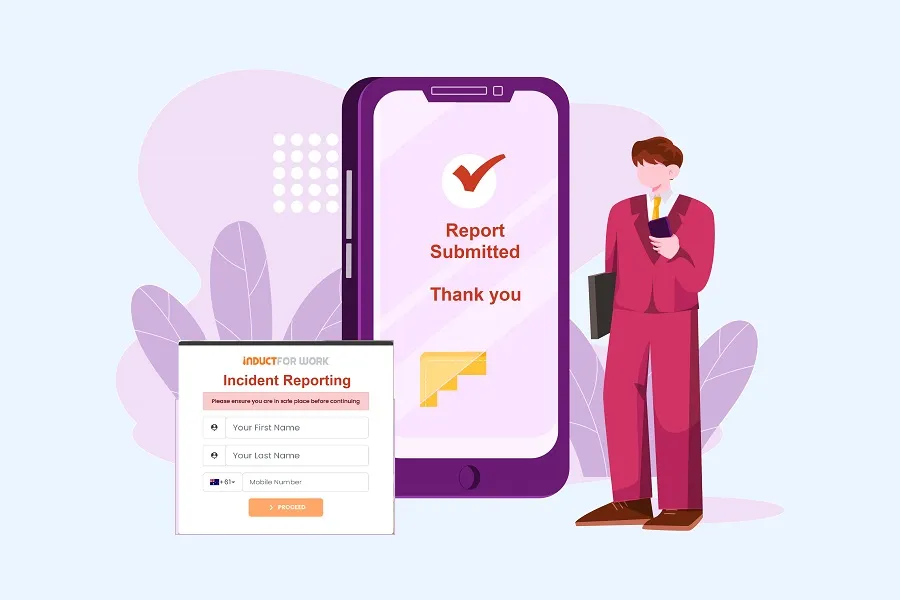
Requested outcome
A report can also ask what the person believes should happen next.
Options may include:
- manager follow-up
- workload review
- role clarification
- team discussion
- formal HR review
- hazard review
- support contact
- customer behaviour control
- rota or staffing review
- urgent response
- no immediate contact, but record the concern
The organisation still needs to decide the proper response, but asking this question helps understand expectations.
A practical reporting workflow
A reporting process only works if reports lead somewhere. If reports disappear into an inbox, workers lose confidence and managers miss patterns.
A practical workflow should include six steps.
1. Receive the report
The report should go to the right person or team quickly. For some organisations, that may be health and safety. For others, it may be HR, a site manager, safeguarding lead, operations manager or a nominated senior person.
Where the concern is serious, the system should help escalate it.
2. Triage the concern
The first review should decide whether there is an immediate risk.
Urgent examples may include threats, violence, severe distress, safeguarding concerns, repeated aggressive behaviour, serious bullying allegations or a situation where a worker should not continue in the same environment without support.
Triage should also decide whether the matter belongs in health and safety, HR, safeguarding, grievance handling or more than one process.
3. Acknowledge the report
Where appropriate, acknowledge that the report has been received.
This does not mean promising a specific outcome. It simply confirms that the concern has not been ignored.
A simple acknowledgement can improve trust and encourage future reporting.
4. Identify the work-related causes
The reviewer should look for the work factors behind the concern.
For example, a conflict report may be linked to unclear roles. A stress report may be linked to workload and staffing. A complaint about errors may be linked to rushed training, poor support or badly managed change.
This step is important because controls should address the cause, not only the symptom.
5. Apply controls or route the matter properly
Actions may include:
- adjusting workload
- reviewing staffing levels
- clarifying responsibilities
- improving supervision
- changing rota arrangements
- adding training
- improving communication during change
- reviewing customer-facing procedures
- separating people temporarily
- involving HR
- starting a grievance or investigation process
- providing support or signposting
- updating risk assessments
Some reports may require immediate action. Others may need a planned review.
6. Record the outcome and review patterns
The organisation should record what happened next.
This may include:
- who reviewed the report
- what risk was identified
- what action was taken
- who was notified
- whether further review is required
- when the matter was closed
- whether similar reports have been raised elsewhere
Over time, this information can reveal patterns across teams, sites or departments.
For example, repeated reports about workload may point to resourcing issues. Repeated reports about customer aggression may show a need for better controls, training or escalation procedures. Repeated concerns during system changes may show that communication is not working.
Why paper and email reporting can fail
Many organisations still rely on paper forms, emails or verbal reports. These methods can work in simple situations, but they often create problems as the organisation grows.
Paper forms can be lost, stored late or filed in the wrong place. Emails can become inconsistent because every person describes the issue differently. Verbal reports can be forgotten, misunderstood or never recorded properly.
A psychosocial hazard can also feel sensitive. If the process is unclear, workers may avoid reporting because they are unsure who will read the information or whether the matter will be handled fairly.
Common weaknesses include:
- no standard reporting form
- unclear ownership
- reports sent to the wrong person
- no acknowledgement
- no follow-up record
- no way to see repeat issues
- no clear distinction between hazard reports and grievances
- no audit trail
- reports spread across inboxes, paper files and spreadsheets
- difficulty reviewing multi-site trends
For psychosocial hazards, consistency matters. Managers need enough detail to identify work factors, but workers also need a process that feels safe and usable.
How digital psychosocial hazard reporting helps
A digital reporting process can make psychosocial hazard reporting clearer and easier to manage.
With Induct For Work UK, organisations can use digital forms, reporting tools and structured records to support workplace safety processes. A worker can submit information from a phone, tablet or computer, while administrators can review reports, track completion and maintain clearer records.
Digital reporting can help organisations:
- standardise report fields
- capture the right work-related factors
- reduce missing information
- notify the right people faster
- create a dated record
- attach supporting information where appropriate
- separate incident, hazard and HR-related follow-up
- review patterns across sites
- keep reports easier to find
- reduce reliance on paper and inboxes
For businesses already using induction training, this can also connect with broader training, onboarding and compliance processes. Workers can be shown how to report hazards during their induction, then use the same platform to raise concerns later.
This is especially useful for contractors, mobile staff, site workers, temporary workers and employees who may not sit near an office or HR team.
Using custom forms for psychosocial hazards
Not every organisation will use the same language or workflow. A school, warehouse, construction company, care provider, local authority and event venue may all need different reporting prompts.
That is why custom forms can be useful.
A custom psychosocial hazard form may include:
- hazard category
- site or department
- affected group
- urgency level
- work factor prompts
- manager notified
- immediate support needed
- requested follow-up
- related incident number
- HR review required
- action completed
- review date
The form can be designed to match the organisation’s process. For example, one business may use a simple early concern form, while another may need a more detailed workflow for multi-site reporting.
The important point is that the form should make reporting easier, not harder.
Linking reporting with records and evidence
Psychosocial hazard reporting should not sit in isolation. It should connect with the organisation’s wider record keeping and safety management processes.
Useful records may include:
- induction completion records
- policy acknowledgements
- incident reports
- hazard reports
- training records
- manager follow-up notes
- action records
- review dates
- document acknowledgements
- communication records
Induct For Work’s record keeping and reporting features can help organisations keep information more organised. Where documents, policies or procedures need to be acknowledged, tools such as e-signatures and the document registry can also support a clearer audit trail.
This matters because psychosocial hazard management is not only about receiving a report. It is about showing what happened next.
Reporting for contractors, temporary workers and visitors
Psychosocial hazards are not limited to permanent employees.
Contractors, temporary workers, agency workers, volunteers and site visitors may also face risks such as aggression, unclear instructions, isolated work, poor supervision or unrealistic demands.
Contractors may hesitate to report concerns because they worry about damaging a client relationship. Temporary workers may not know who to speak to. Visitors may experience aggressive behaviour or distressing situations but leave before anything is recorded.
A clear reporting route helps reduce this gap.
For contractors, connect reporting with online induction training for contractors UK. Explain who they should contact, what should be reported and how urgent concerns will be handled.
For visitors and short-term workers, keep the process simple. They may not need the same reporting pathway as employees, but they still need a way to raise safety or behaviour concerns.
How to introduce psychosocial hazard reporting
A reporting process will only work if people understand it.
When introducing the process, explain:
- what psychosocial hazards are
- why early reporting matters
- what types of concerns should be reported
- when to use HR, grievance or safeguarding routes
- who can see a report
- how confidentiality is handled
- what happens after a report is submitted
- how urgent risks are escalated
- how reports are reviewed
- how patterns are monitored
This information can be included in induction training, refresher training, manager briefings and workplace communication.
Managers also need guidance. A poor response can discourage future reporting. A good response focuses on the work factors, treats people respectfully and documents the next step clearly.
Common mistakes to avoid
Psychosocial hazard reporting can fail when the process is too vague, too sensitive to use or too disconnected from action.
Avoid these common mistakes:
- treating every concern as a personal complaint only
- ignoring work design factors
- failing to acknowledge reports
- asking for too much information at the start
- giving no guidance on confidentiality
- leaving managers unsure who owns the response
- mixing hazard reports and grievances without explanation
- keeping no record of actions
- failing to review repeat reports
- relying only on informal conversations
- waiting until someone is already off sick
- using a form that workers cannot access easily
A better process is clear, practical and consistent.
Make psychosocial hazard reporting easier to manage
Psychosocial hazards can affect safety, wellbeing, productivity, retention and workplace trust. They deserve a reporting process that is clear enough for workers to use and structured enough for managers to act on.
Induct For Work can help UK organisations create digital reporting forms, collect structured information, maintain records and review workplace safety activity from one platform.
Instead of relying on scattered emails, paper forms or informal conversations, your organisation can use a clearer process to capture psychosocial hazard reports, route concerns, record actions and support better follow-up.
For businesses that already use online inductions, this can also become part of a broader safety and compliance workflow. Workers can learn what to report during induction, use digital forms when concerns arise and help the organisation identify risks before they escalate.
A safer workplace starts with better visibility. Psychosocial hazard reporting gives people a way to speak up and gives employers a better chance to act early.
Frequently asked questions
Psychosocial hazard reporting is the process of recording work-related factors that may affect psychological or physical health. This can include excessive workload, poor support, bullying, aggression, unclear roles, conflict, isolation or badly managed change.
UK employers have a legal duty to protect workers from stress at work by assessing risks and acting on them. A reporting process can support that duty by helping employers identify concerns, review work factors and keep records of action taken.
A psychosocial hazard report focuses on work-related risks and the controls needed to reduce harm. A grievance is a formal complaint process. Some situations may need both, especially where bullying, harassment, discrimination or serious workplace conflict is involved.
Bullying may be reported as a psychosocial hazard where it creates a workplace health and safety risk. Depending on the situation, it may also need HR, grievance, disciplinary or dignity at work handling. Acas says employers should take complaints seriously.
A report should include the date, location, people involved, what happened, whether the issue is repeated, what work factors are involved, whether there is an immediate risk and what action has already been taken.
Induct For Work can support anonymous reporting. To enable this, edit the relevant Reporting Form and remove any fields that capture the reporter’s personal details, such as name, email address or user information.
This allows workers to submit a report without identifying themselves, while still giving your organisation the information needed to review the concern and take appropriate action.
Anonymous reports can help identify patterns, although they may limit follow-up. The reporting process should explain how anonymous and confidential reports are handled.
They can be. Aggression, threats, abuse or violence from customers, patients, clients, visitors or the public can create psychological and physical risks. These concerns should be recorded and reviewed through the appropriate safety process.
Digital forms help standardise reports, capture the right details, notify the right people and keep a record of action taken. They also make reporting easier for remote, mobile, contractor and multi-site workers.
Yes. Induct For Work can support digital reporting forms, incident and hazard reporting, records, reporting and follow-up workflows. This helps UK organisations create a more consistent process for capturing and reviewing workplace safety concerns.
Yes. Induction training is a good place to explain what psychosocial hazards are, what should be reported, who to contact and how reports are handled. This helps workers understand the process before an issue occurs.
Start a free trial or book a demo to see how INDUCT FOR WORK UK can support your workplace induction training processes.
Author: Mick S Brown
Published: 11/07/2026
Updated: 14/07/2026